

By Mercy Kihugu and Erastus Brian.
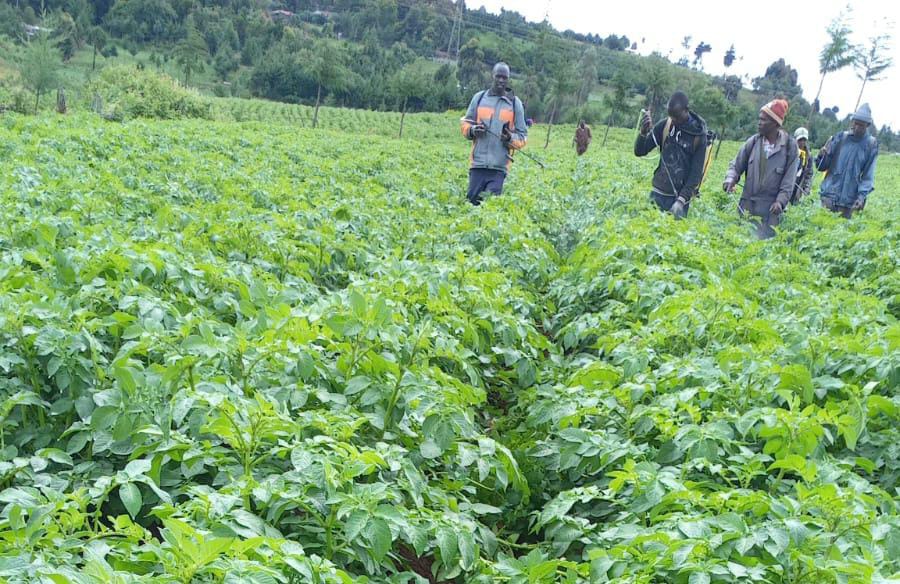
Farmers during a Farmers Field and Business School in Kamara Ward– photo courtesy Mercy Kihugu NCGPU
The County Government of Nakuru, in collaboration with CARE Kenya through the CAtalyzing Strengthened policy aCtion for heAlthy Diets and resilience (CASCADE) Project, has convened a two-day Farmer Field and Business School (FFBS) model Review and Planning Meeting to evaluate the progress of FFBS implementation, reflect on key achievements and lessons learned, and develop actionable strategies to strengthen the performance, replication and sustainability of the model across the county.
The FFBS model is currently being implemented in Kuresoi South, Kuresoi North, Molo and Nakuru Town West sub-counties, where participating farmer groups are cultivating potatoes, high-iron beans, African leafy vegetables and garden peas.
The initiative equips farmers with practical skills in sustainable production, agribusiness, climate resilience and market linkages, enabling them to improve productivity and household incomes.County Agribusiness Officer Ruth Mutie said the review meeting provided an important opportunity to evaluate the impact of the programme while identifying areas that require improvement to ensure greater benefits for farmers.
“The Farmer Field and Business School model has continued to demonstrate its value by empowering farmers with both technical production skills and agribusiness knowledge. Through this review, we are identifying best practices, addressing implementation challenges and developing practical strategies that will strengthen the programme’s effectiveness and sustainability,” she said.
She noted that the lessons documented during the two-day meeting will inform future implementation while creating opportunities to expand the model to more farming communities across Nakuru County.
”The success recorded by farmer groups in Kuresoi South, Kuresoi North, Molo and Nakuru Town West shows that combining climate-smart agriculture with business skills enables farmers to make informed production decisions, diversify enterprises and improve market participation. Our focus now is to strengthen replication of this model so that more farmers can benefit,” she added.
The second day of the review and planning meeting focused on assessing the impact of the Farmer Field and Business School model under the CASCADE Project and identifying practical ways to make it stronger and more sustainable.
Extension officers from Kuresoi South, Kuresoi North, Molo and Nakuru Town West shared field experiences, noting that the FFBS model has helped farmers improve crop production, adopt climate-smart farming practices and strengthen their agribusiness skills.
Participants highlighted successes in the production of potatoes, high-iron beans, African leafy vegetables and garden peas, while also observing that farmers have embraced improved farming practices, strengthened collaboration through farmer groups, enhanced household nutrition and increased their incomes through better market access.
Participants further noted that changing weather patterns, including unreliable rainfall and prolonged dry spells, remain a major challenge affecting crop yields and making it difficult for farmers to plan their farming activities.To address these challenges, the meeting recommended scaling up climate-smart agriculture, promoting water harvesting and irrigation, encouraging the adoption of drought-tolerant crop varieties, strengthening extension services and continuing farmer capacity building through the FFBS model.The discussions also reaffirmed the County Government’s commitment, under the leadership of H.E. Governor Susan Kihika, to empower farmers, particularly women, who play a critical role in food production and household nutrition.
The meeting will conclude with the development of an action plan aimed at improving coordination, strengthening farmer capacity, enhancing monitoring and evaluation, and promoting the sustainable implementation and replication of the FFBS model across Nakuru County.The County Government of Nakuru remains committed to partnering with stakeholders in the agricultural sector to promote climate-resilient agriculture, improve food and nutrition security, and create sustainable livelihood opportunities for farming households across the county.